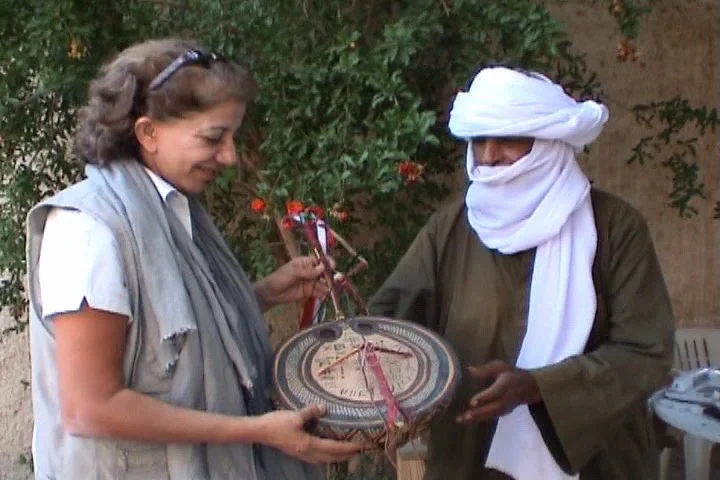
“The imzad is to the Touareg what the soul is to the body”
the late Aménokal Hadj Moussa Akhamouk told me that day.
 Encounter, 2002
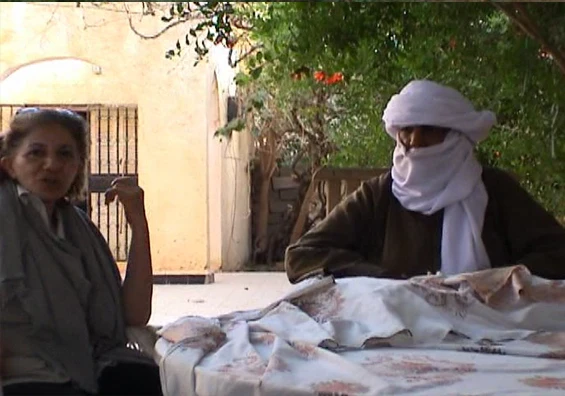
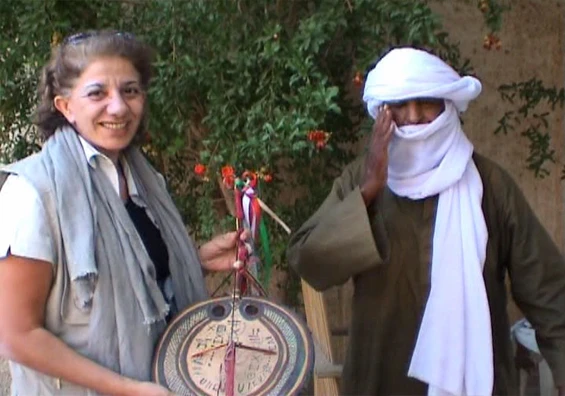
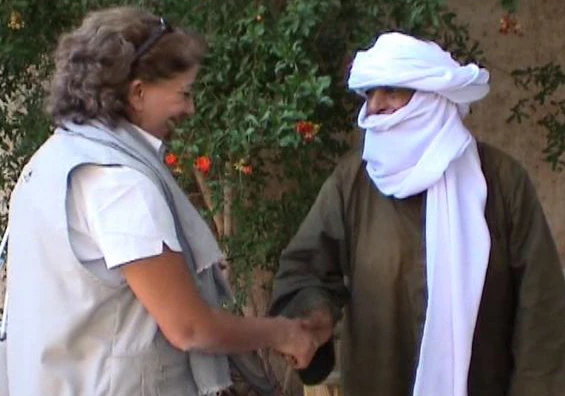
 In 2002, when I set off again to Tamanrasset in search of the imzad player who had saved my life, I found once more Seddik Khetali, the driver-guide I had had at the wilaya directorate in Tamanrasset. It was he who was with me during that famous mission that had almost cost me my life but that had taught me to go to the very limit, deep within myself. As I spoke to him of the imzad, he looked at me, drew his chèche up over his nose to hide his emotion, and said to me: “Come, someone will speak to you of the situation of the Imzad better than I can.” And so it was that he took me to see the Aménokal, the late Hadj Moussa Akhamok.
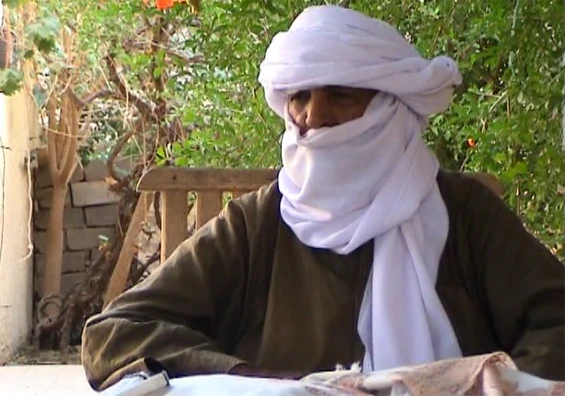
In the grandeur of the wisdom that calls upon the highest virtues, giving meaning to the individual who seeks his own values within himself, the Aménokal received me and spoke to me in these terms:
“Who does not remember the great literary and musical gatherings of the Ahal? The legend of the desert and of its valiant warriors, extolled there in poetic discourse. Who does not remember the players of the Imzad, that musical instrument which accompanies the telling of the chivalric exploits of our great warriors ? The imzad, which is to the Touareg what the soul is to the body. The imzad, which carries men away and transforms them into intrepid fighters, quick to make powder and blade speak. “.
Drawing up his chèche, he fell silent for a moment, and after a sigh he went on:
“You came, long ago; you brought with you the television that dislocated, destroyed our gatherings of imzad and of ahal. There remain no more than four or five imzad players in all the Hoggar. There is no more poetry. Our culture, our traditions are dying out.”
He spoke with a sadness I could not describe.
“Perhaps I speak with nostalgia of times past, of the tales of Moussa Amestane, of Akhamouk ag ihemma, of Meslagh ag amayas, of Bey Akhamouk, those great Amenokal dignitaries of the Ahaggar, but I think too of the symbiosis that has always drawn the people of the Sahara close to those of the high plateaus and the Sahel”
The emotion I keep of that day pierced my heart forever. And in that moment, my decision was made. I look at Seddik, who was sitting not far from us:
“Seddik, are you ready to help me find the old imzad players again and to Save the Imzad”
The word came out in that instant: “Save the Imzad”.
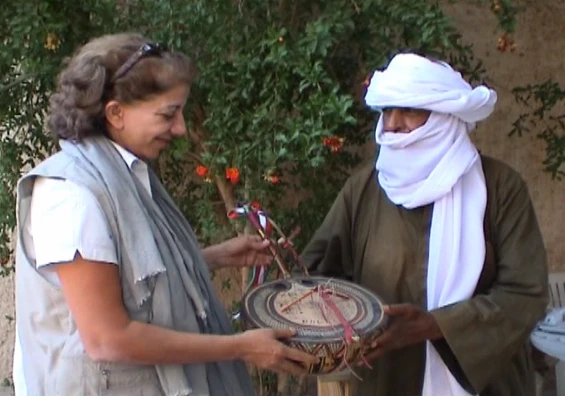
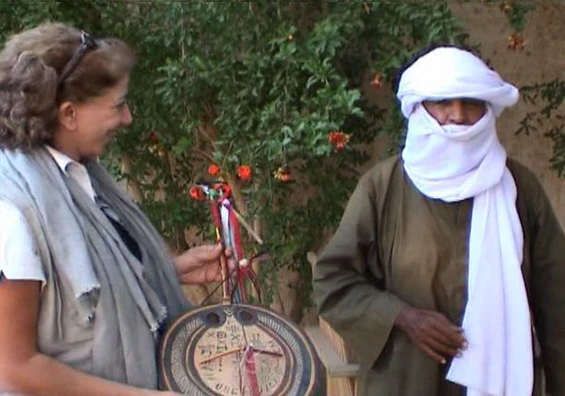
Hearing me utter these words, the Aménokal rose and, without saying a word, went out, then came back with an imzad in his hand.
“I was to present this imzad to President Bouteflika, but it is to you that it falls, for it is you who will restore the order of things. I entrust it to you”
I left him, promising to come back to see him to propose a plan of action.
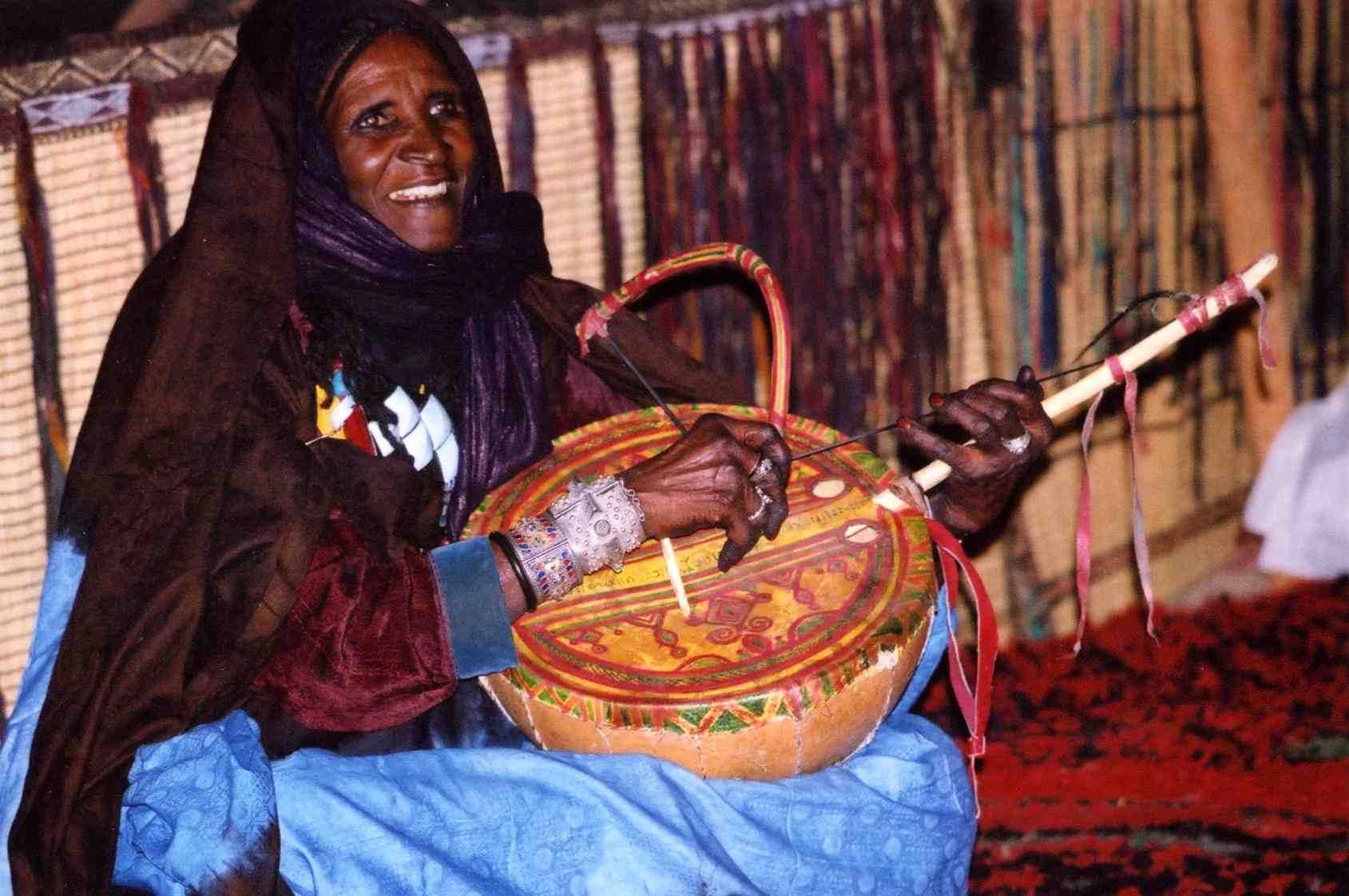 Alamine Khoulen
 Seddik then took me to Alamine Khoulen, who welcomed me with a smile radiant with affection. She hastened to take up her imzad. Our reunion remains in my memory as the most beautiful treasure that I had sworn to keep preciously.
It was with Alamine Khoulen and Seddik Khetali that we agreed to create an imzad school, with the setting up of an association we would call “Save the Imzad”. The enthusiasm for the challenge to be met was such that the whole population rallied to the project. The late Hadj Moussa Akhamok was our honorary president; the endeavour was launched.
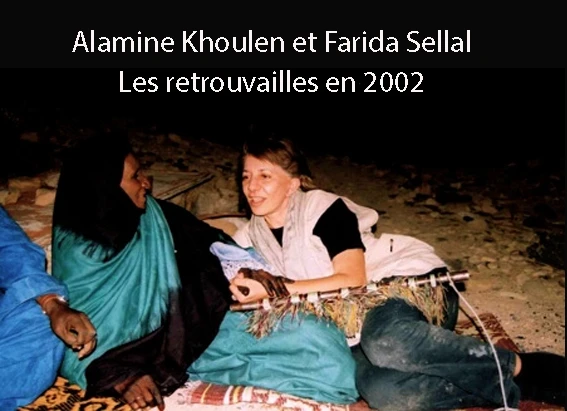 Farida Sellal and Khoulen, 2002
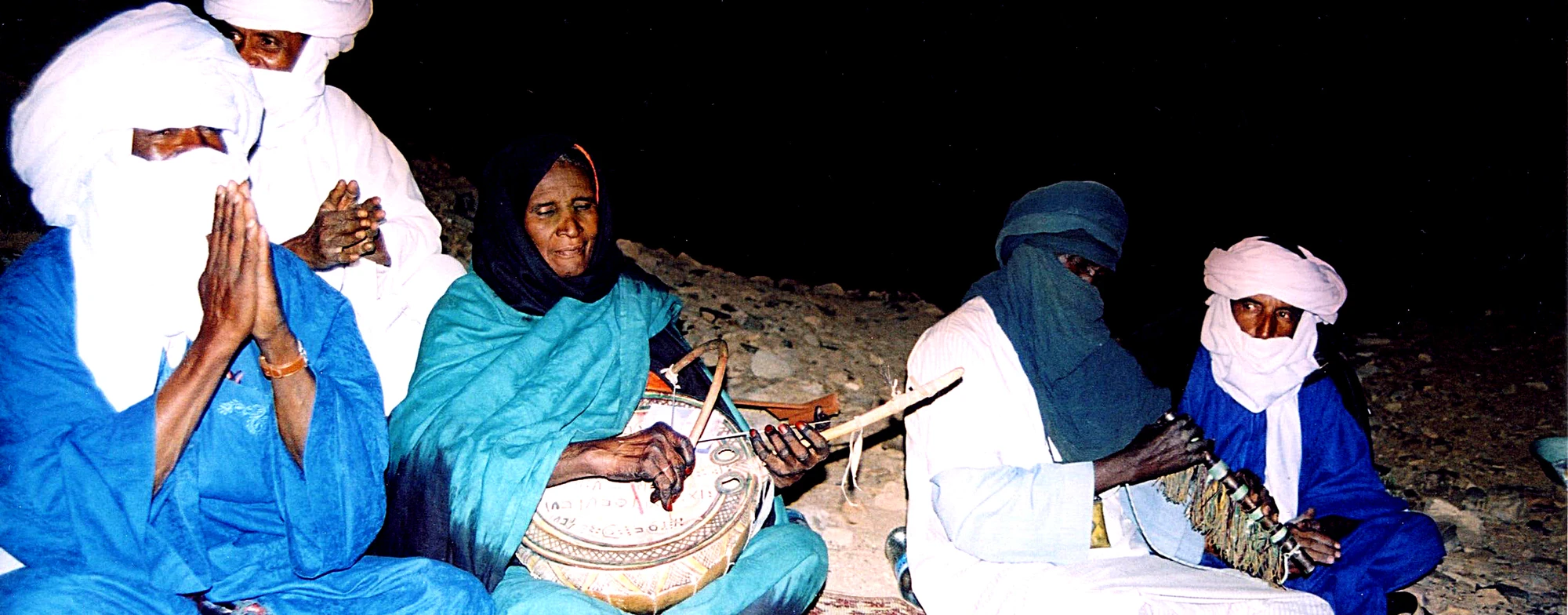
 In days gone by, the imzad was often played on the occasion of a courtly gathering. People would still gather around the imzad until the setting of the sun, the hour when they parted. Some went to bring in their herds, others to see to their affairs, and this until nightfall. The evening, convivial, would then resume until the hour of the milking of the herds beneath a starry sky ; the low and high notes of the imzad, a refrain ; words draping themselves in sounds, enthralled the guests in the divine and infinite silence of the desert.
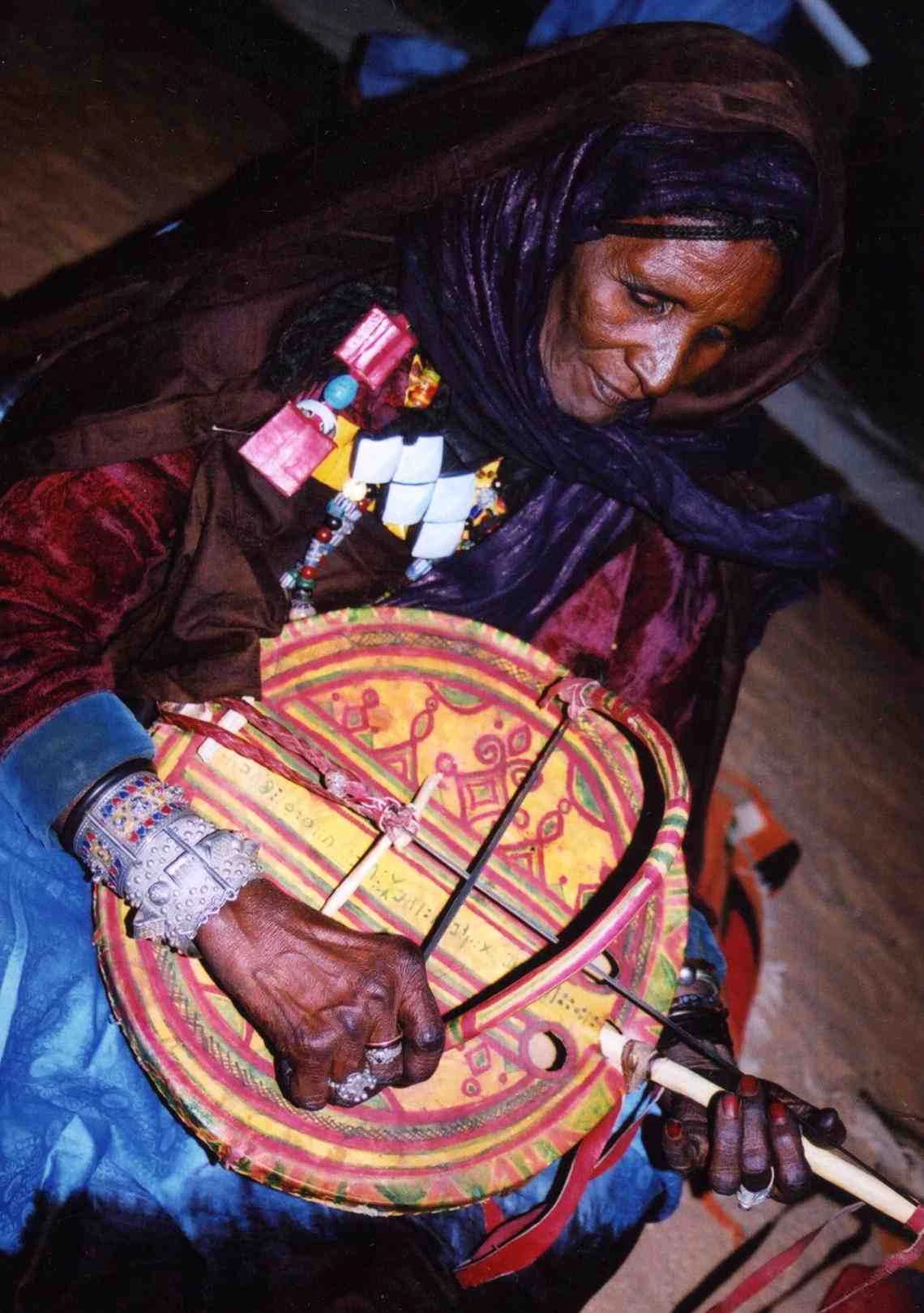
The imzad is an instrument reserved exclusively for women. No other instrument is associated with it. To the air of the imzad, the man sings, and only the sound of his voice is allowed to mingle with that of the instrument. Every event, any detail of life, all is rhymed or sung. The value given to this act in itself is singular; the mood and the atmosphere are its whole charm.
Far from being a mere musical instrument, the imzad embodies at once the past and the dream of the Touareg. It tells of their culture, their love of the beautiful, their life and that grandiose feeling of freedom, poetically bringing out their legendary pride. Made of their daily life, it carries their existence from one generation to another, from one love to another, and from one hope to another. The playing of the Imzad most often takes place beneath a starry sky. Its music moves men to the very depths of their soul.
In the poems of the Ahaggar, recited or sung, everything was called forth, from pastoral life to the warrior epic, from the song of courtly love to martial poems, to win the beloved…. And the imzad violin became the emissary of the Eternal.
The imzad — instrument of Touareg women
« Humbly I adore the works of the Most High
Who gave to the violin better than a soul,
So that the moment it plays men fall silent
And their hands go to the litham to draw it down
To hide their emotion (*).
The cares of love were about to lay me in the tomb,
But thanks to the violin, O son of Aïchoum !
God gave me back my life. »
Anonymous poem, set to music by Maurice Jaubert in Chants sahariens : cinq poèmes touaregs
(*)The litham is a part of the veil. Men draw down its upper part, so that even the eyes are hidden, letting no mark of emotion show.
 Farida Sellal
 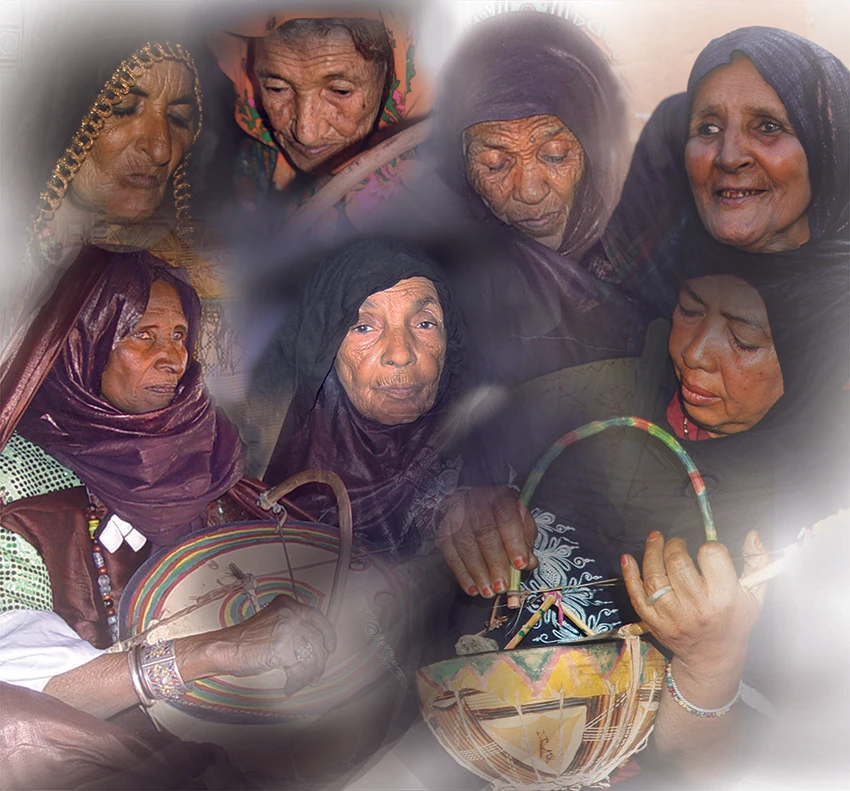 The imzad players
 The Imzad, A Knowledge, a Poetry in the Feminine
If the history of the Touaregs is intimately bound to the desert, it is so also thanks to the essential role played by women. Indeed, originally, the first Touareg nucleus was formed by the noble TIN HINAN and her servant TAKAMA. Moreover, art and music were their reserved domain. This instrument remains as prized as ever, and men accompany the sound of the imzad with verses sung and cadenced by their ho-hôo notably in the evenings of the illustrious « Ahal »…
In 2002
Only a few old ladies now share this knowledge.
In 2002
Thanks to the hearts of these women, the heart of this culture still beats…
We had to think of tomorrow
Had we not helped the last of these virtuosos to carry on the Imzad, it was a whole history, an epic, and a body of knowledge that were to be swallowed up in the abyss of oblivion. This tragedy took on a humanitarian dimension, for it would have led to the irreversible disappearance of a culture and of a priceless universal heritage.
The need to create an association to “SAVE THE IMZAD” imposed itself on me. My decision was made.
I ended my contractual commitments with UNIDO. I committed myself to the Fondation Désert du Monde. Took a sabbatical year. I signed up for Algeria in France 2003, and from January 2003 I began my awareness campaign in Algeria and throughout the world.
The aim was to undertake the conservation and safeguarding of these airs come from the depths of a thousand-year-old past, by cataloguing the music and the songs according to their genres and their modes.
To preserve this element of the intangible heritage of humanity, to bring back to life the Touareg poetry imbued with a celestial melody come from the depths of a people enamoured of love and freedom, living in the wondrous and enchanted space of the Hoggar, is a historical and musical work of major importance.